A friend of mine who's been watching the Palatine market since January told me she'd checked the same listing site twice this year and come away with two opposite conclusions. In January, the number said prices were falling, down nearly 14 percent from the year before. By June, the same source said prices were climbing, up better than 6 percent year over year. Same town. Same data provider. Same six months. Two different markets.
If you're comparing Palatine against other Northwest suburbs right now, you've probably run into this. The median sale price Redfin reported for Palatine sat at $329,000 in January 2026, down 13.8 percent from the year before, with homes taking an average of 67 days to sell and only 48 closing that month, down from 50 the prior January. By June, the same Redfin data showed a median of $399,782, up 6.3 percent year over year. Zillow's home value index, updated at the end of May, put the average Palatine home value at $385,886, up 5.2 percent over the past year. Three snapshots, three different stories, all technically accurate.
None of this means the market lied to anyone. It means the median is a much less stable number than it looks, and the instability tells you something real about how Palatine's housing stock is built.
The median isn't measuring appreciation. It's measuring what closed.
A median sale price only describes the homes that actually sold in that window. It says nothing about whether any individual home gained or lost value. When the mix of what's closing shifts from month to month, the median shifts with it, even if every single house in town is worth exactly what it was worth a year ago.
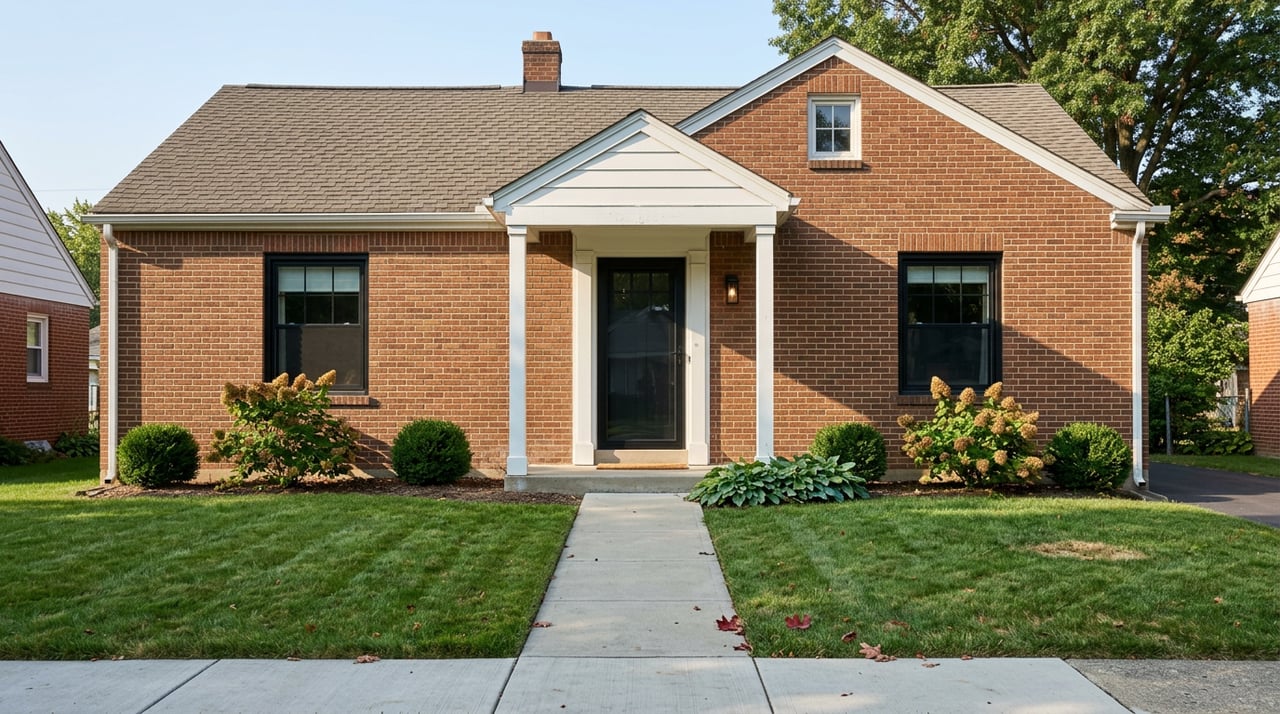
Palatine is an easy place for that mix to shift, because the housing stock itself is unusually split. Downtown alone, prices for what's actually changing hands range from $100,000 to $200,000 for older condos and two-bedroom ranch-style houses, up to $200,000 to $300,000 for newer condos and townhomes, and up to $400,000 to $500,000 for split-levels and modern Cape Cods with three or four bedrooms and yard space. The neighborhood's own median sale price lands around $320,000, a number that only makes sense once you understand it's an average of genuinely different housing products, not variations on one type of home.
So when a cluster of entry-level condos closes in a given month, the median drops. When a run of move-up split-levels closes the next month, it jumps. Neither move tells you the market got 14 percent cheaper or 6 percent more expensive. It tells you which shelf of the inventory buyers happened to clear that month.
| Metric | January 2026 | June 2026 |
|---|---|---|
| Median sale price | $329,000 | $399,782 |
| Year-over-year change | down 13.8% | up 6.3% |
| Homes sold that month | 48 | not reported |
| Average days on market | 67 | not reported |
If you're only checking one month before making a decision, you're not seeing the market. You're seeing a snapshot of whichever slice of inventory happened to trade.
Downtown's history explains why the split is this wide
The reason Palatine has such a broad spread of housing types in one zip code goes back to a specific infrastructure decision. The reconstruction of Palatine's Metra station in 2001 kicked off a wave of downtown building that, according to the village's own planning documents, has added nearly 1,000 residential units and roughly 200,000 square feet of new commercial space since. That growth stacked new condos and townhomes on top of a downtown that already had decades of split-levels, ranches, and Colonial Revivals on its side streets. The tracks themselves run right through the middle of it, and the housing stock on either side developed at different times under different pressures.
That's the physical reason the median swings the way it does. It isn't one housing market. It's several, layered on top of each other, all reporting into the same monthly number.
Why this year specifically is a strange one to read
There's a second layer worth knowing if you're watching downtown Palatine right now. A major infrastructure project started this spring on Slade Street, running from Greeley Street east along Railroad Avenue to Plum Grove Road, including the parking lot between Brockway and the tracks. The disruption was significant enough that the village canceled its annual three-day Street Fest for 2026, replacing it with two smaller food truck events instead, one in June near Towne Square and one in August in the lot near Lamplighter Inn Tavern & Grille. The village had budgeted $50,000 for Street Fest this year and is aiming to bring the full event back in 2027.
A downtown under construction doesn't mean a downtown in decline. It means the comps from this particular summer need a little more context than usual.
That context matters if you're comparing recent closings near the Metra corridor to closings from a year ago. Reduced parking, altered foot traffic, and a summer without the usual signature event can all affect how quickly a downtown-adjacent listing moves and what it ultimately sells for, independent of anything happening to values elsewhere in Palatine.
At the same time, investment downtown hasn't stopped. The village council approved a new indoor golf facility this spring, Loft 19 Golf Club, for a second-floor loft space at 117 W. Slade St., the same street under construction. Owners Phil Volini and Ben Kastien secured a special use permit along with a beer and wine license for the 2,800-square-foot space, which shares its building with Madcats restaurant, a photography business, and a local soccer organization. Three golf simulators, each able to host up to six players by reservation, are set up in a building that's operating around active roadwork out front. That's not the behavior of a downtown people are betting against.
What this means if you're comparing Palatine to somewhere else
If you're cross-shopping Palatine against another suburb, don't anchor to a single month's median from any source. Ask instead what type of home is being compared. A $329,000 median built from starter condos and a $399,782 median built from move-up split-levels are not measuring the same market getting more or less affordable. They're measuring two different shelves of the same town.
The practical version of this: when you're serious about a specific price range in Palatine, ask for closings matched to your property type over a full year, not a single month's blended number. A townhome buyer should be looking at townhome comps. A split-level buyer should be looking at split-level comps. Mixing them in is how a perfectly healthy market ends up looking like it's swinging 20 points in either direction.
There's also a timing detail worth knowing if you're planning to close in Palatine this year. Cook County reassessed Palatine Township property values last fall, with notices mailed September 9, 2025, and an appeal deadline of October 22, 2025. Whatever fair market value the assessor set during that window is what shows up on 2026 tax bills. For single-family homes and condos, that assessed value equals 10 percent of the estimated market value before the state's annual equalizer is applied. If you're budgeting a monthly payment based on last year's tax bill, it's worth confirming that number reflects the current reassessment cycle rather than an older figure.
A few questions that come up often
Why would a home's estimated value go up while the reported median goes down? Because they're measuring different things. An individual home's assessed or estimated value reflects that specific property. The median reflects whatever mix of homes happened to sell that month across the entire town. Both can be true at once.
When is downtown Palatine's Street Fest coming back? The village has said the goal is to restore the full event in 2027, once the Slade Street and Railroad Avenue construction work is further along. The two food truck events in 2026 were designed as a bridge, not a replacement.
Does the reassessment affect homes that just sold? The Palatine Township reassessment set values based on the county's estimate as of the notice date last September. Homes that sold afterward at a different price can be a basis for an appeal in a future cycle, but the current bill reflects the assessor's figure from that window, not the most recent sale price.
If you're trying to make sense of what a specific Palatine block is actually worth right now, rather than what a monthly average says, that's exactly the kind of question worth working through with someone who tracks these closings block by block. Jackie Manrique can walk you through the comps that actually match what you're buying or selling, not the blended number a portal happened to publish this month. Let's Connect.
